
© Lennart Blank
© Lennart Blank
© Lennart Blank
© Lennart Blank
© Lennart Blank
Typically, 3D printing uses software to automatically generate print paths and code that the printer can interpret from digital 3D models.
Both this software and the 3D printers themselves have become increasingly user-friendly in recent years. More and more functions are being automated and taken off the user’s hands, making 3D printing more accessible even to those without prior knowledge. However, this automation comes with the drawback of increasingly losing control over the process.
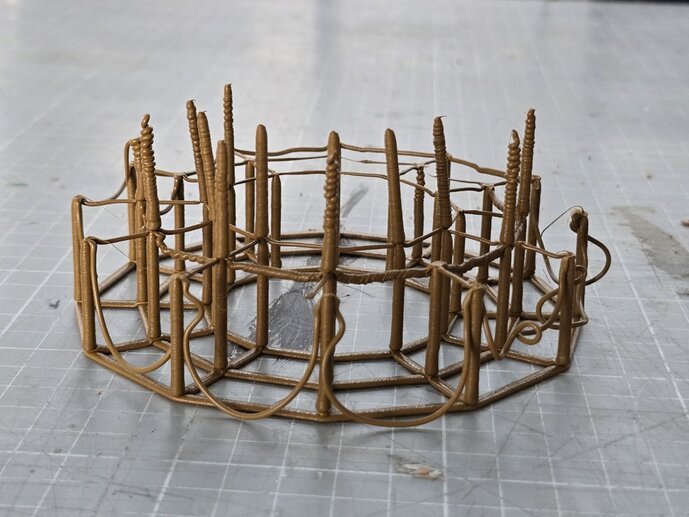
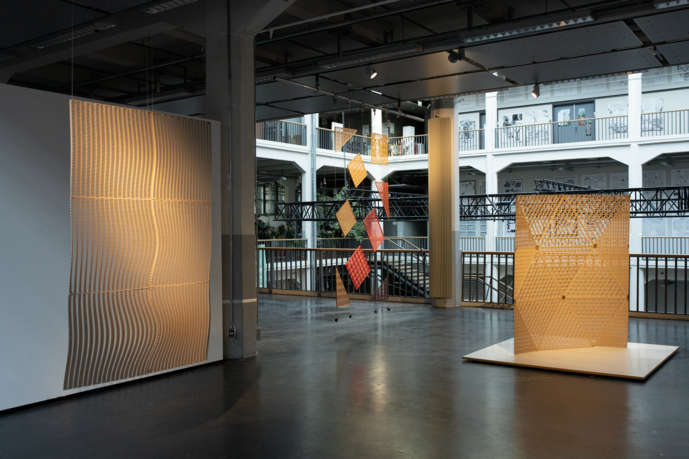
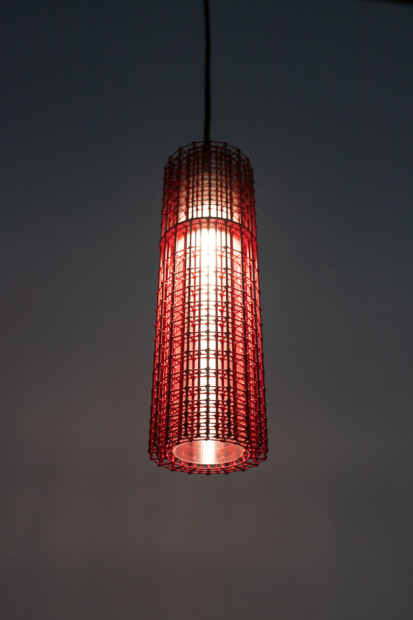
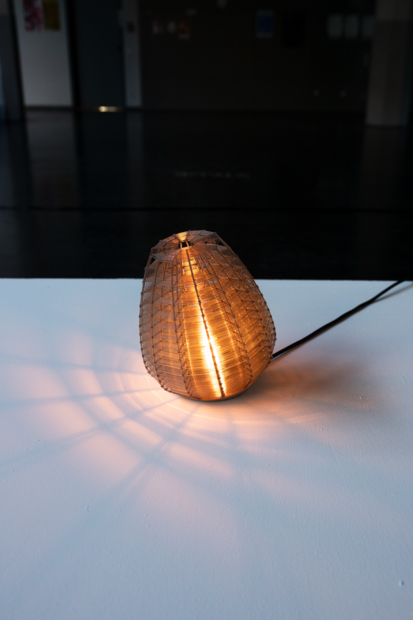
The goal of Lennart Blank’s thesis was therefore to regain more control over the printing process using custom-developed software while simultaneously exploring new applications for 3D printing in a playful way.
The focus is on the phenomenon of “bridging,” which is typical of 3D printing. Bridging refers to printing freely in the air without using supports.