
© India Marie Adams
© India Marie Adams
© India Marie Adams
© India Marie Adams
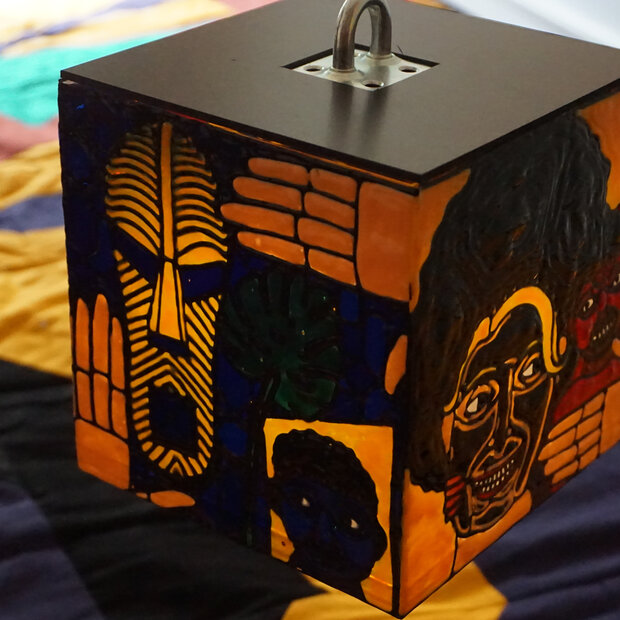
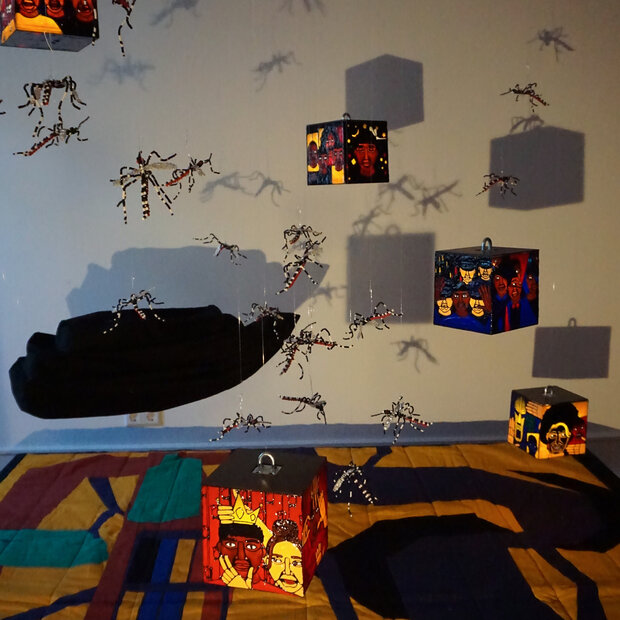
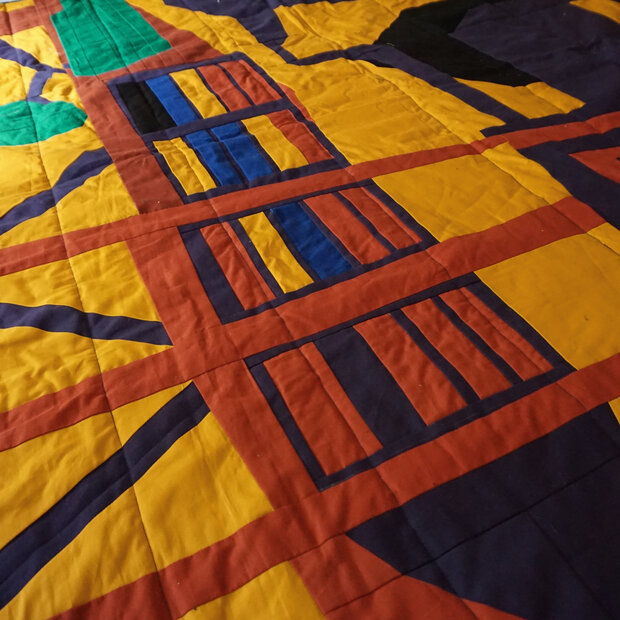
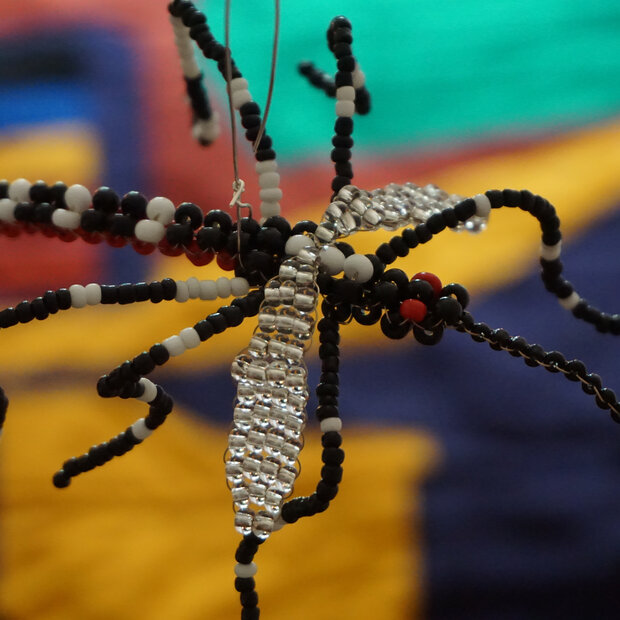
Suspended above a quilt depicting the Rhine in both its natural and canalized form are five illuminated lanterns featuring scenes from Caliban's life, a black ferry, and a swarm of tiger mosquitoes. The installation is accompanied by a sound piece. Together, these elements tell the story of Caliban, who attempts to navigate a world whose categories are insufficient to describe his experience.
The work initially follows the logic of The Ugly Duckling. In the fairy tale, repeated encounters with the Other are experienced as rejection. Redemption is promised only through the encounter with one's own kind. The story thus presents an understanding of identity and belonging based on similarity, dividing the world into clear categories of self and other.
Through the figure of Caliban, the work explores what happens when belonging and identity can no longer be established through origin, similarity, or arrival.
While the writer and thinker Édouard Glissant understands identity as something that emerges through relation and is constantly transformed, the African American oral tales surrounding the trickster figure Brer Rabbit likewise resist any final resolution. Unlike The Ugly Duckling, the search does not lead to a lasting state of equilibrium. Instead, another logic emerges, in which identity and belonging are shaped not through the encounter with one's own kind, but through ongoing relations, shifts, and reorientations.