
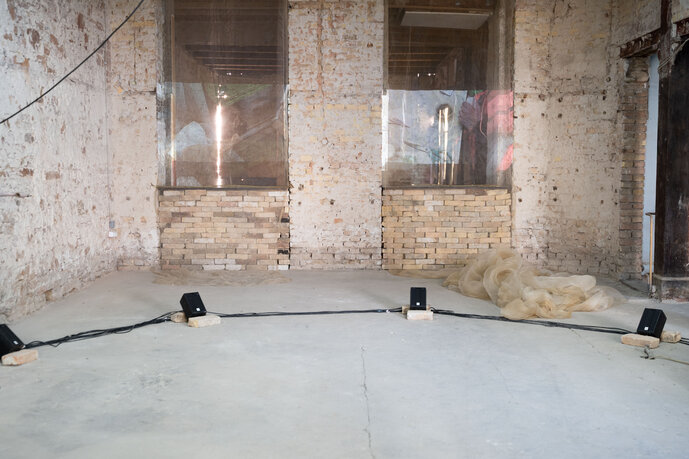
"Rote Saat" - Exhibition View, Photo: Laura Waterstradt
“Rote Saat” (engl: "red seed") is an installation that explores the disappearance of traditional crop varieties in Germany and the importance of seed banks as living archives. The starting point is the observation of a drastic decline in crop diversity since the 20th century, caused by industrial agriculture, legal regulations, and the focus on a few high-yield varieties. Many regionally adapted heirloom varieties no longer meet today’s certification criteria and have consequently disappeared from cultivation.
The work uses this development as an opportunity to make the processes of preserving, passing on, and reactivating seeds visible and tangible.
About the Artist:
Laura Waterstradt (b. 1998) is originally from North Rhine-Westphalia and has been studying exhibition design and scenography at the Karlsruhe University of Arts and Design (HfG Karlsruhe) since 2023. She works as a graphic designer and combines her creative skills with site-specific research. In her practice, she explores, among other things, connections to the landscape and ecofeminism. The work “Rote Saat” was created in the context of artistic research into agroecological practices, seed policy, and collective forms of knowledge transfer. The starting point was a collaboration with local initiatives in Karlsruhe, in particular the community-supported agriculture project KArotte, the Social Garden (afka), and the Gene Bank for Wild Plants for Food and Agriculture.
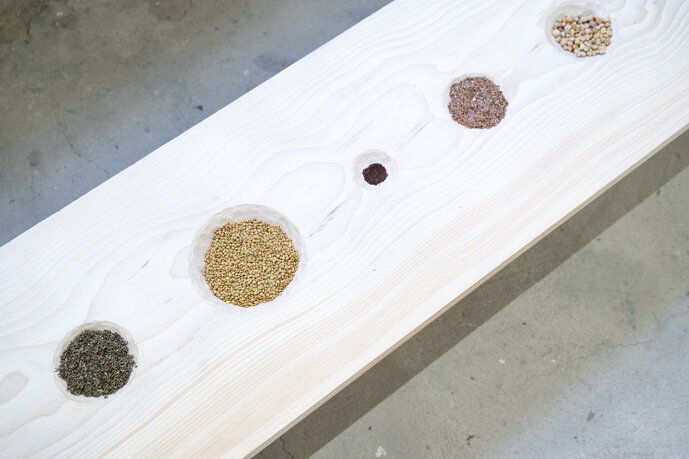
"Rote Saat" - Exhibition View - "Saatgut der roten Liste", Photo: Laura Waterstradt
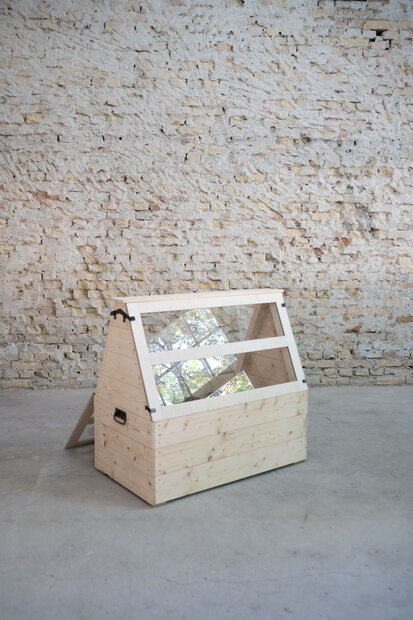
"Rote Saat" - Exhibition View, Photo: Laura Waterstradt