
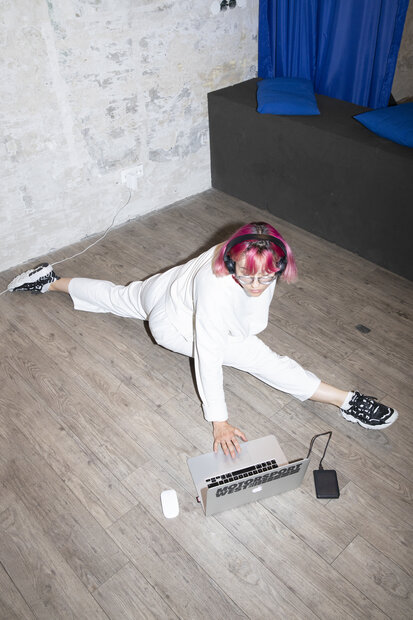
In Conversation with Michelle Mantel.
Hi Michelle! You’re an HfG alumna—please introduce yourself briefly: Who are you, and where can we find you these days?
I’m Michelle Mantel, a freelance photographer and videographer. I currently live and work in Berlin.
What did you study at the HfG?
My major was Communication Design, but I also always enjoyed taking Media Art and Product Design seminars.
And what do you do for a living now?
I work in product photography, particularly on campaigns for designer furniture. At the same time, I provide visual documentation for research projects, for example for Charité or Humboldt University in Berlin. I also often travel to special locations or meet interesting people for magazines to shoot photo spreads there. So it’s all very varied :)
What motivated you to pursue a degree in the arts when you first started college? And would you do it again—that is, pursue a degree in design? / Why?
Right after high school, I wasn’t sure at first whether I should study chemistry or something creative. That’s why I didn’t start studying right after graduating from high school; instead, I first did an internship with the photographer Rafael Kroetz. After that, it was clear to me that I wanted to pursue a creative path. To this day, I’m glad I made that decision!
Do you remember why you wanted to go to the HfG Karlsruhe specifically, or why you applied here (among other places)?
I already knew about the HfG from my older sister, who studied communication design there. I then looked at various universities, but none appealed to me as much as the HfG: The fact that you could take courses from other programs, that older and younger students work together, and that as a student you have a say in who gets hired to teach at the university through the professor selection hearings. At first, of course, I didn’t want to study at the same university as my sister, but that turned out to be really nice later on ;) We still work together a lot to this day.
If you had to explain what you do for a living to someone who knows absolutely nothing about the field, how would you describe your work?
Most people know what photographers do. What might be unique about me is that I accompany clients from start to finish in bringing their ideas to life: from the concept through styling and casting, to the actual photography, of course, but also location scouting, image selection, and post-processing. These days, many photographers are given ready-made concepts that they then execute—I usually handle this step myself—and I enjoy doing so. With portraits, I try to capture moments that could have happened even without a camera present. Everyone reacts to the camera, usually unconsciously. I try to create situations where people can move naturally again.
To put it simply: What do you enjoy most about your work? This might sound corny, but to me, photography feels like dancing. When I’m taking photos, I’m completely in the moment and forget everything around me, yet at the same time, I’m acutely aware of everything. I really love that feeling.
Is there anything you find particularly challenging—and anything you could easily do without? To be more specific: Is self-employment more of a curse or a blessing—or, in your opinion, what are the challenges of this type of work that a traditional 9-to-5 job doesn’t entail?
Of course, many aspects of self-employment are demanding. You have to be able to organize and motivate yourself well and cope with a certain amount of uncertainty. But in return, it also offers enormous freedom. A tip for all women and FLINTA* (and something I think isn’t discussed enough): try to adapt your daily work routine to your cycle. For example, when am I most creative, have the most energy for shoots, or can focus well on invoicing?
Your visual language is clear, minimalist, and yet very striking. How do you approach a new project—do you start with a visual concept, a thematic idea, or does much of it emerge during the photographic process itself?
Concepts are an important part of my work that I really enjoy, but as a photographer, you always have to remain spontaneous and open-minded. You can never plan for every eventuality. For example, I once wanted to photograph an outdoor furniture collection: great locations, planned for sunny weather, lots of greenery—but then it started raining on the day of the shoot. Instead of canceling the shoot, I was able to convince the client on the spot to style the furniture in the rain—because that’s exactly what sets outdoor furniture apart! The rain photos are now one of my favorite series.
Was there a moment after graduation when you thought, “Okay, now it’s getting serious”? How did the transition from school to self-employment/practical work feel for you?
No, but probably because I had already started working freelance while I was still in school. So for me, as for most of my classmates, it was more of a smooth transition.
Your website showcases a wide range of projects. Is there one that’s particularly close to your heart—perhaps because it was a turning point or presented a special challenge?
I’m reminded of a portrait shoot with an artist: When she saw my photos, she said she’d never felt so authentically captured in pictures before. She attributed this to the fact that I had photographed her through a woman’s perspective, whereas previously she had only posed for male photographers. That was one of the nicest compliments I’ve ever received, and it’s a particular source of motivation for me when I encounter difficulties as a woman in this profession.
Soft and/or Hard Skills: What did you take away from your studies at the HfG that is particularly helpful to you today in your professional life—and perhaps even in your personal life?
At the HfG, I learned to “unlearn knowledge.” By that I mean to question the obvious or the established; because doing so often opens up new frameworks, possibilities, or ideas.
How has the HfG shaped your approach to design?
It has taught me to view design as a political and social responsibility. That design is always accompanied by a certain stance—there is no such thing as “no design.”
When you look back on your time as a student today: In hindsight, what was more important than you realized at the time?
The conversations with the professors outside of seminars, for example during field trips. There, we gained more personal insights into the future professional world and learned what drives them or what challenges might arise.
What would you say to your first-semester self today?
Watch “Star Trek: The Next Generation” right away!
Is there anything from your time at the HfG—your college days—that you especially miss?
Everything was new. We spent the first semester practically day and night at the HfG. That energy was truly special.
And is there anything you don’t miss at all?
My HfG email inbox with its extremely limited storage space.
Thanks for the interview!
Find out more about Michelle Mantel here: https://michellemantel.com/
To view the next image in the gallery below, just click on the photo!
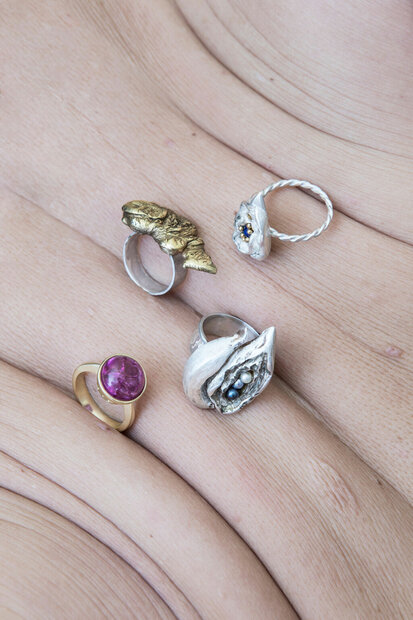
Jewelery Jule Bode Campaign, Photo: Michelle Mantel
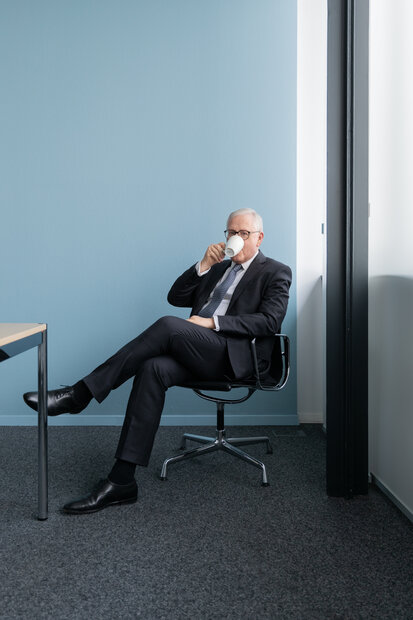
Porträt, Photo: Michelle Mantel

Dog, Photo: Michelle Mantel
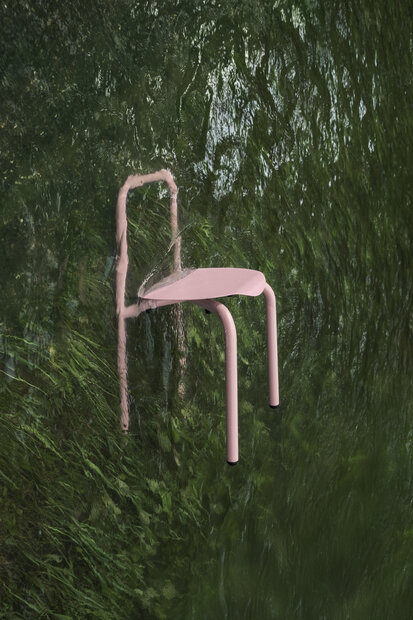
Blockbau, Photo: Michelle Mantel
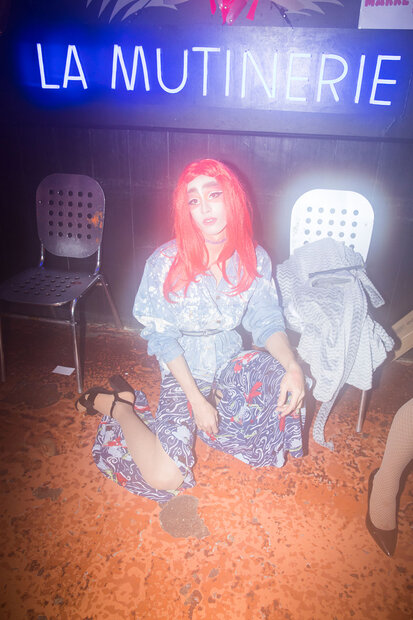
Blockbau, Photo: Michelle Mantel
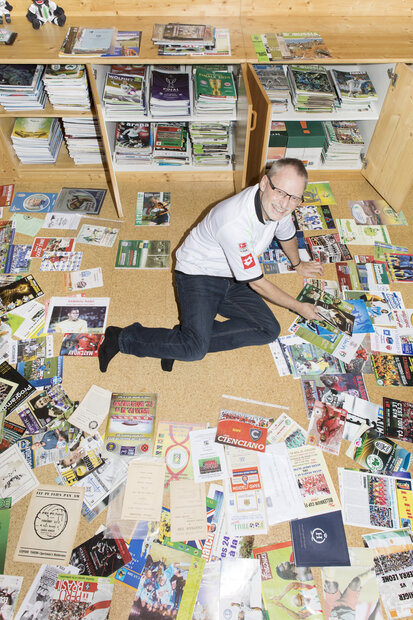
Porträt, Photo: Michelle Mantel

